
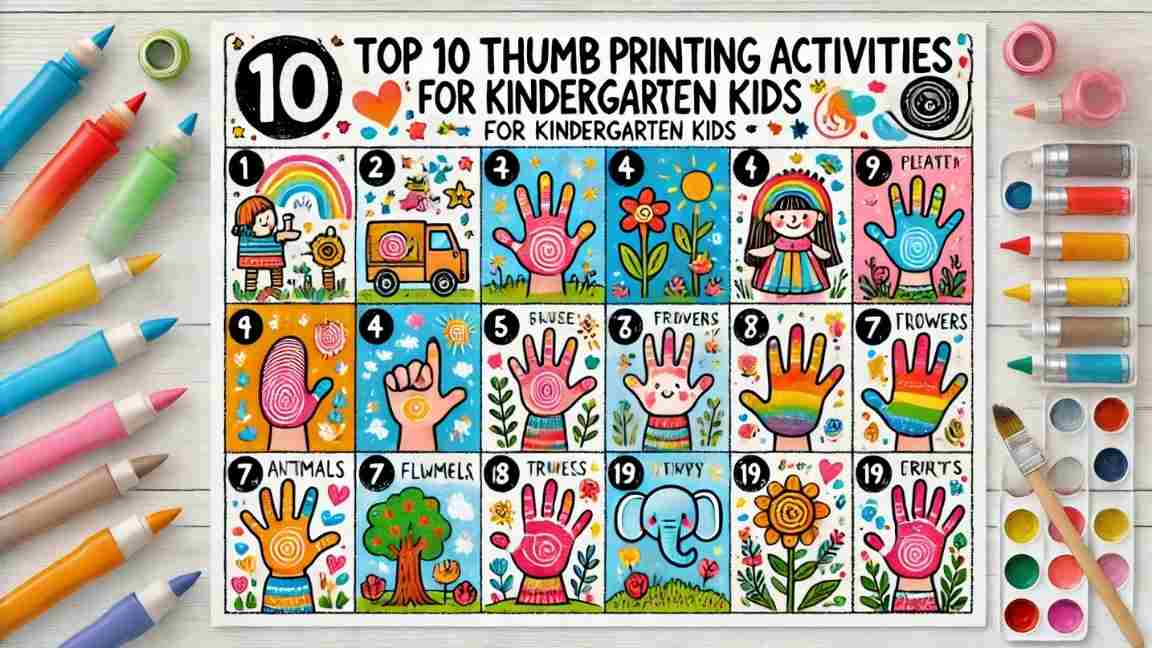
As a kindergarten teacher, I’ve seen how creative activities can engage young children and foster their development. Thumb printing activities for kindergarten are one of my go-to tools to teach children not only about creativity but also about fine motor skills, colors, and patterns. These activities are easy to set up, fun for kids, and require minimal materials, making them perfect for the classroom or at home.
In this article, I’m going to share the best thumb printing activities for kindergarten that I’ve used with great success. I’ve found that these activities not only capture children’s imaginations but also support their learning in exciting ways. Below, I’ll explain how to do each activity, share my personal experiences, and highlight the responses I’ve received from kids and parents alike.
Thumb Printing Activities for Kindergarten
1. Thumbprint Animals
One of the most fun thumb printing activities for kindergarten is creating animals using just thumbprints. For example, using a thumbprint for the body of a frog, a bird, or a butterfly, and then adding features with markers or paint.
How to do it:
- Dip your thumb in green (for a frog) or any other color for the animal you’re creating.
- Press the thumb gently on the paper to create the body.
- Add eyes, ears, legs, and other features with markers or colored pencils.
Personal Experience:
This activity was a hit during a “Farm Animal” week in my class. The children loved how their thumbprints transformed into cute little animals. Parents shared how excited their kids were to show their animal creations at home.
2. Thumbprint Trees
Thumbprint trees are a simple yet effective way to teach kids about nature and the seasons. You can create a tree trunk and let the kids use their thumbprints to form the leaves or fruits, changing colors depending on the season.
How to do it:
- Draw a tree trunk on a piece of paper.
- Dip the child’s thumb in green or red paint for leaves or apples.
- Let them press their thumbprints onto the paper, covering the branches.
Personal Experience:
This activity was particularly enjoyable in the fall when we discussed how trees change with the seasons. The kids loved how they could create a personalized tree. Parents shared how the thumbprint tree became a cherished keepsake.
Also Read: Preschools in Rohtak
3. Thumbprint Flowers
For a creative twist, thumbprint flowers are a fantastic option. It combines thumbprints with a bit of drawing to create colorful and beautiful flowers.
How to do it:
- Dip the child’s thumb in different colors of paint (red, yellow, pink).
- Press the thumbprint multiple times in a circular pattern to form a flower.
- Draw a stem and leaves with markers to complete the flower.
Personal Experience:
I did this as a spring project, and the children were fascinated by how their thumbprints could form flowers. Parents were thrilled to receive these bright, colorful thumbprint flowers as part of a “Mother’s Day” gift.
4. Thumbprint Insects
Another thumb printing activity for kindergarten that’s always a success involves making insects. Thumbprints can be used to create the body of a ladybug, bee, or butterfly.
How to do it:
- Use a black thumbprint for a ladybug or a yellow thumbprint for a bee.
- Add wings, antennae, and other details with markers.
Personal Experience:
This activity was part of a “bugs and insects” lesson, and the children loved making ladybugs and bees. It was not only fun but educational as well, as they learned about the different insects.
5. Thumbprint Mosaics
Thumbprint mosaics allow children to create larger pictures using individual thumbprints. This activity encourages fine motor skills and creativity.
How to do it:
- Choose an image the child wants to create (a heart, star, or simple animal).
- Use thumbprints in various colors to fill in the picture.
- Let the child place the thumbprints close together to form a larger design.
Personal Experience:
We did a group mosaic project, and the children worked together to create a large picture. The response was overwhelmingly positive, with kids excited to see how their thumbprints contributed to a larger image.
6. Thumbprint Alphabet
A great way to help kids learn letters is to turn each letter into a fun thumbprint project. For example, the letter “A” could be created by making a thumbprint that’s then surrounded by lines or shapes.
How to do it:
- Draw an outline of a letter.
- Fill the inside of the letter with thumbprints, using a variety of colors.
- Encourage the child to say the letter name and sound as they do the activity.
Personal Experience:
This activity worked really well during our phonics lessons. I found that kids were able to better associate letters with sounds through the tactile experience of thumb printing. Parents reported their children had fun practicing their letters at home, too.
Also Read: Preschools in Thane
7. Thumbprint Clouds
This is a relaxing activity where children create thumbprint clouds in the sky, an excellent way to explore shapes and creativity.
How to do it:
- Dip the thumb in white or gray paint.
- Press the thumb on the paper to form soft cloud shapes.
- Let children draw rain or lightning around their clouds for added detail.
Personal Experience:
This activity was part of a weather theme in our classroom, and the children enjoyed creating their own skies. The clouds were a hit, and parents told me they loved displaying them at home as a fun weather-themed artwork.
8. Thumbprint Birds
Birds are another popular subject for thumb printing, and creating thumbprint birds can help children develop their imagination and creativity.
How to do it:
- Use a thumbprint for the bird’s body.
- Add wings, eyes, and beaks with markers.
- Draw trees or nests if desired.
Personal Experience:
When I introduced thumbprint birds, the children were excited to create their own “flock.” They had fun naming their birds, and parents loved how the birds looked on display in the classroom.
Also Check: School Parent app
9. Thumbprint Fish
This thumb printing activity for kindergarten involves creating beautiful fish using thumbprints. It’s a great way to teach children about aquatic life.
How to do it:
- Dip your thumb in blue, green, or yellow paint for the fish body.
- Add fins, eyes, and scales with markers.
- Complete the picture with water, seaweed, and bubbles.
Personal Experience:
This activity was part of our “Under the Sea” theme, and the children were fascinated by how they could create colorful fish. The thumbprint fish were a big hit, and parents said their children loved to explain the pictures to them.
10. Thumbprint People
A fun activity that encourages children to create characters is thumbprint people. They can make their own faces, friends, and even family members.
How to do it:
- Use a thumbprint for the face of the person.
- Add features like eyes, a nose, and a smile with markers.
- Let children draw bodies, hair, and other accessories.
Personal Experience:
During a “Family and Friends” week, this activity helped children connect with their own families. They enjoyed making thumbprint versions of their loved ones. Parents shared how special it was to receive these personalized creations.
Conclusion
These thumb printing activities for kindergarten are more than just fun crafts—they help children develop their fine motor skills, learn about colors, and express their creativity. From creating animals to learning the alphabet, thumb printing activities offer endless possibilities for learning and engagement. In my experience, kids love the tactile nature of thumbprinting, and the joy on their faces when they see their thumbprints transform into something new is priceless.
As a kindergarten teacher, I highly recommend incorporating these activities into your lessons. Not only are they enjoyable, but they also provide valuable opportunities for learning. I hope you find these thumb printing activities for kindergarten as useful and engaging as I have!
Also Read: Number Activities for Kindergarten