
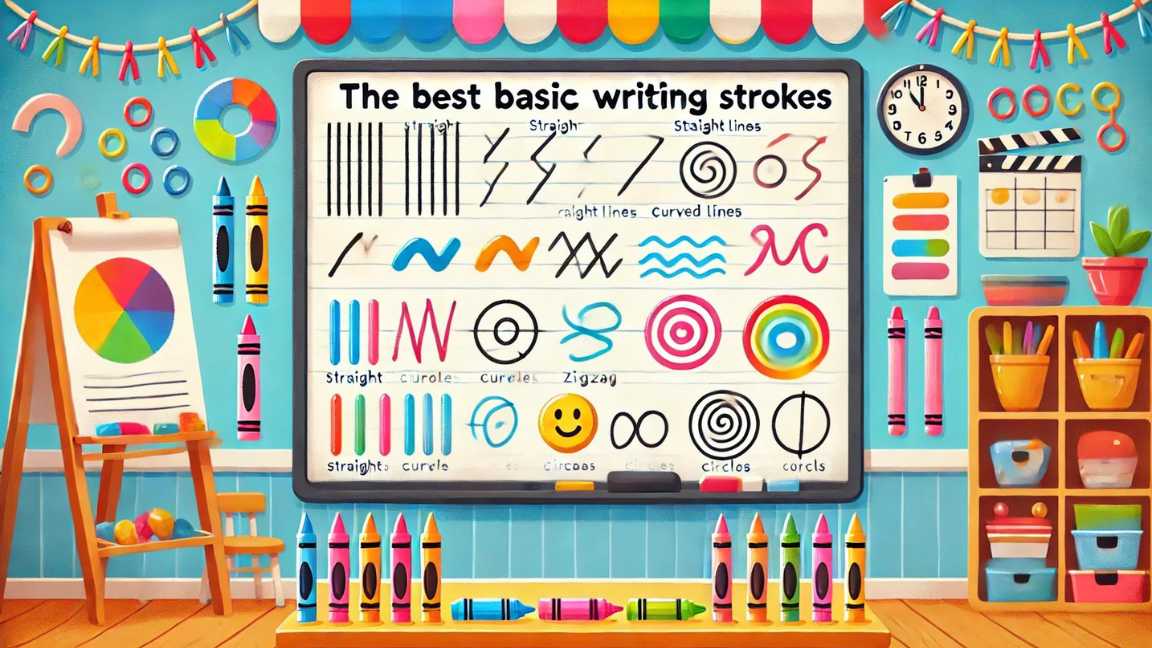
Teaching basic writing strokes to kindergarten kids is crucial in laying the foundation for their future handwriting skills. These strokes are the building blocks that help children develop the fine motor skills and muscle memory needed for writing letters, numbers, and other shapes. In this article, we will explore ten Basic writing strokes for kindergarten kids, how to teach them effectively, and share personal experiences on how these strokes can be introduced in a fun and engaging manner.
Basic Writing Strokes for Kindergarten
1. Vertical Lines
Description: Vertical lines are the simplest and most basic writing strokes. They are straight lines drawn from top to bottom, which help children understand the concept of directionality in writing.
Teaching Tip: Start by having children draw vertical lines on a large sheet of paper or a chalkboard. Encourage them to use their entire arm to draw the line, rather than just their wrist. This helps develop gross motor skills and muscle memory.
Personal Experience: When I introduced vertical lines to my kindergarten class, I found that using a ruler to guide their lines made the activity more enjoyable. The children were excited to see how straight they could make their lines, and it also helped them understand the concept of alignment.
2. Horizontal Lines
Description: Horizontal lines are drawn from left to right. These lines are essential for teaching children how to write letters like E, F, and T.
Teaching Tip: Use a whiteboard or paper and encourage children to draw lines across the page. To make it fun, turn it into a race where they draw lines as quickly and accurately as possible.
Personal Experience: I found that using different colors for horizontal lines made the activity more engaging. The children loved choosing their favorite colors and were eager to fill the page with colorful lines.
3. Circles
Description: Circles are essential writing strokes that help children develop the ability to write letters like O, Q, and G.
Teaching Tip: Start by having children draw large circles on paper using their whole arm. Gradually reduce the size of the circles as they become more comfortable with the motion.
Personal Experience: I often incorporated circle-drawing activities into art projects. For example, we would draw faces or other objects using circles, which helped the children see the practical application of this stroke.
Also Check: Alphabet Activities For Kindergarten
4. Diagonal Lines
Description: Diagonal lines are used to form letters like A, K, and X. These lines help children understand different directions in writing.
Teaching Tip: Use fun activities like drawing diagonal lines to connect dots or complete shapes. This makes the learning process interactive and enjoyable.
Personal Experience: I noticed that incorporating diagonal lines into drawing activities, like creating stars or triangles, helped children understand the concept better. They were more motivated to practice when they saw the shapes they could create.
5. Curved Lines
Description: Curved lines are essential for writing letters like C, S, and U. These lines help children develop control over their writing tools.
Teaching Tip: Begin with large, sweeping curves and gradually reduce the size as the children become more comfortable. Encourage them to trace over dotted lines to reinforce the motion.
Personal Experience: I often used tracing sheets with dotted curved lines for the children to practice. This not only improved their writing skills but also boosted their confidence as they saw their progress.
6. Zigzag Lines
Description: Zigzag lines are a fun way to help children practice changing directions quickly. These lines are great for developing fine motor skills and coordination.
Teaching Tip: Turn zigzag lines into a game where children have to follow a path or maze. This makes the activity more engaging and helps reinforce the concept.
Personal Experience: My students enjoyed creating zigzag patterns on paper, which we later turned into art projects like making mountains or waves. This cross-curricular approach kept them interested and eager to practice.
7. Wavy Lines
Description: Wavy lines are similar to zigzags but with a more fluid motion. They are useful for teaching children to control the pressure they apply with their writing tools.
Teaching Tip: Encourage children to draw wavy lines to represent water or waves. This not only makes the activity fun but also helps them understand the application of the stroke.
Personal Experience: I used wavy lines as a way to introduce creative drawing exercises. The children would draw wavy lines to create oceans, rivers, or even hair on characters, making the practice enjoyable.
Also Check: Preschools in Delhi
8. Crosses and Plus Signs
Description: Crosses and plus signs are foundational strokes for writing letters like T, X, and I. They help children learn to intersect lines accurately.
Teaching Tip: Use grid paper to help children practice crossing lines in the right places. This provides a visual guide and helps them understand spacing.
Personal Experience: Incorporating crosses and plus signs into math activities, like drawing grids or solving simple addition problems, reinforced the importance of accuracy in their strokes.
9. Spirals
Description: Spirals are a more advanced stroke that helps with writing letters like S and G. They also aid in developing fine motor control.
Teaching Tip: Start with large spirals and gradually reduce their size. Encourage children to draw spirals inside each other, like a snail shell, to practice control.
Personal Experience: I used spirals in art projects, such as drawing snail shells or curly hair. The children found these activities fun and challenging, which kept them engaged.
10. Hooks and Loops
Description: Hooks and loops are essential for cursive writing and help with letters like J, Y, and Z. These strokes develop the fluidity needed for connected writing.
Teaching Tip: Provide worksheets with hook and loop patterns for children to trace. Encourage them to practice slowly to build muscle memory.
Personal Experience: Introducing hooks and loops as part of a cursive writing lesson was a great success. The children were fascinated by the fluidity of the strokes and enjoyed the challenge of mastering them.
Conclusion
Teaching basic writing strokes for kindergarten is a crucial step in developing strong handwriting skills in young learners. By introducing these essential strokes through fun and engaging activities, children can build the fine motor skills, coordination, and confidence needed for writing. Whether you’re a teacher or a parent, incorporating these techniques into your daily routine will help kindergarten kids master the basics of writing, setting them up for success in their educational journey. These methods not only make learning enjoyable but also ensure that children develop a strong foundation in writing that will benefit them throughout their academic life.
Also Check: School Parent app