
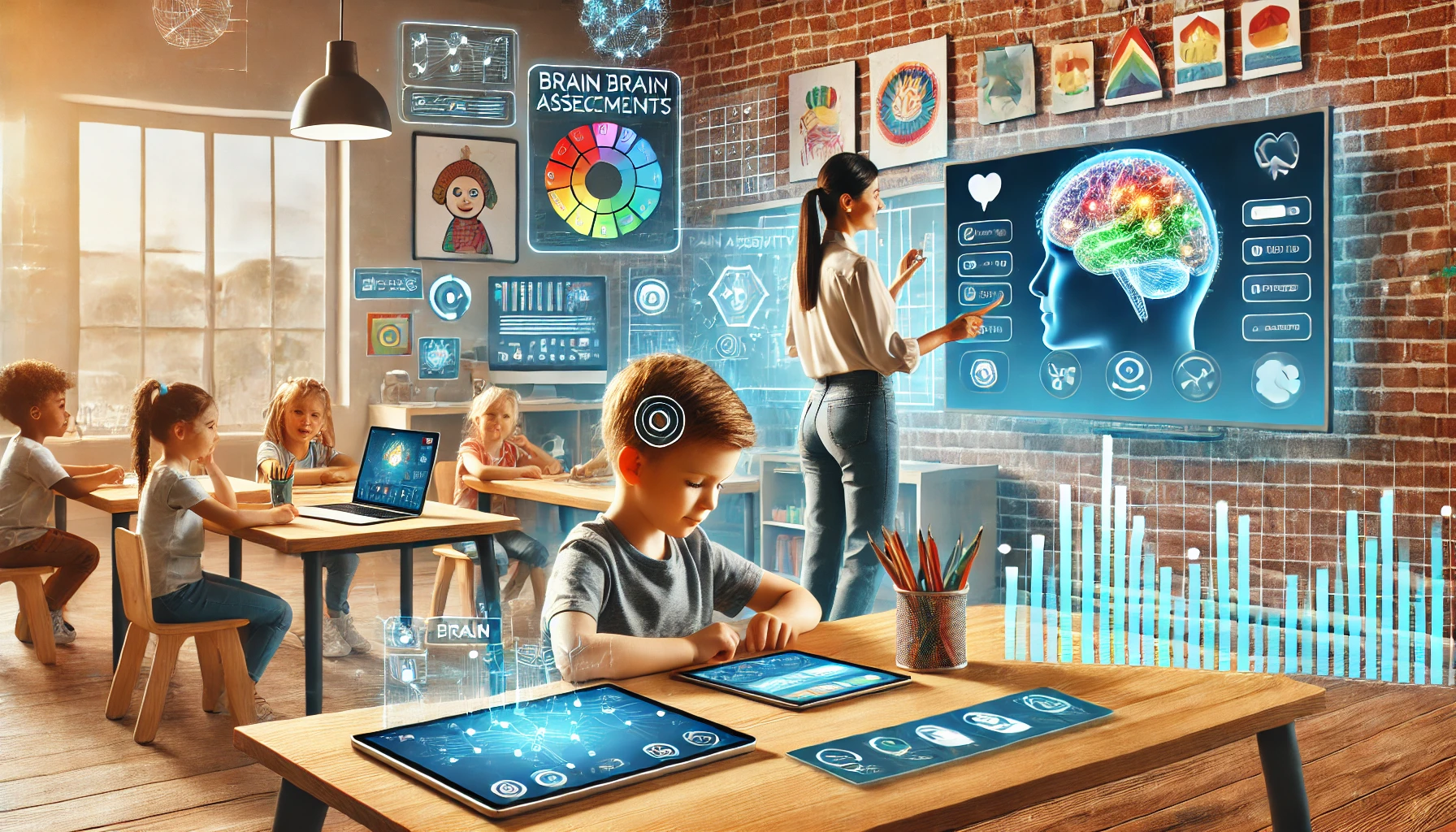
In recent years, technology has greatly enhanced how we assess and understand child brain development. These advancements provide more accurate, efficient, and detailed insights into how children’s brains grow and function. Here’s an in-depth look at how technology improves child brain assessments and the benefits it brings to parents, teachers, and healthcare professionals.
Advanced Brain Imaging Techniques
One of the most significant advancements is in brain imaging techniques. These technologies provide detailed visualizations of the brain’s structure and activities.
- MRI and fMRI: Magnetic Resonance Imaging (MRI) and functional MRI (fMRI) are powerful tools that give detailed pictures of the brain’s structure and show how different parts of the brain are functioning. MRI helps in identifying structural issues, while fMRI maps brain activity by measuring changes in blood flow.
Example: A child showing signs of developmental delays can undergo an MRI to check for structural abnormalities or an fMRI to observe brain function during tasks. These detailed images help doctors and educators understand the underlying issues and tailor interventions accordingly. - EEG: Electroencephalography (EEG) measures electrical activity in the brain, providing real-time data on brain function. EEG is particularly useful for detecting conditions like epilepsy, monitoring brain development, and studying brain activity patterns.
Example: If a child experiences seizures, an EEG can help determine the type and source of the seizure activity, leading to more accurate diagnoses and treatments.
Digital Cognitive Assessments
Digital cognitive assessments have revolutionized how we measure and understand cognitive functions such as memory, attention, and problem-solving skills.
- Computerized Testing: Digital platforms offer standardized cognitive tests that are interactive and engaging for children. These tests adapt to the child’s responses, making them more accurate and personalized.
Example: Programs like CogniFit provide a range of games designed to test and improve various cognitive skills. These programs generate detailed reports on a child’s performance, helping parents and educators identify strengths and areas for improvement. - Adaptive Learning Systems: These systems adjust the difficulty of tasks based on the child’s performance, offering a personalized assessment experience that keeps children engaged and motivated.
Example: An adaptive reading program might start with simple words and sentences. As the child’s reading skills improve, the program introduces more complex texts, ensuring that the child is always challenged but not frustrated.
Also Check: Department of Women and Child Development
Wearable Technology
Wearable devices offer continuous monitoring of various health and cognitive parameters, providing valuable data on different aspects of brain development.
- Smart Headbands: Devices like smart headbands monitor brain activity, providing data on focus, relaxation, and overall cognitive health. These devices help track how children respond to different stimuli and activities.
Example: A smart headband used during classroom activities can measure a child’s attention levels, helping teachers understand which activities engage students the most and adjust their teaching methods accordingly. - Fitness Trackers: While primarily used for tracking physical activity, these devices also monitor sleep patterns, which are crucial for brain development. Good sleep is essential for cognitive functions such as memory consolidation and learning.
Example: Data from fitness trackers can show if a child is getting enough sleep. Parents and teachers can use this information to make sure the child has a consistent sleep schedule, which supports better learning and behavior.
Interactive Learning Tools
Interactive tools like educational apps and virtual reality (VR) have greatly enhanced learning and cognitive assessments.
- Educational Apps: Apps designed for early childhood education include games and activities that stimulate cognitive development. These apps track a child’s performance and progress, providing insights into their learning journey.
Example: Apps like ABCmouse offer a variety of activities that cover different subjects. The app tracks the child’s progress and adapts to their learning pace, making it a useful tool for both parents and teachers. - Virtual Reality (VR): VR experiences immerse children in educational scenarios that enhance spatial awareness, problem-solving skills, and overall cognitive abilities. VR can simulate real-life scenarios, making learning more engaging and effective.
Example: A VR app might simulate a grocery store where children can practice math skills by adding up prices and making change. This hands-on experience helps solidify abstract concepts through practical application.
Benefits for Parents and Teachers
The integration of technology in brain assessments offers numerous benefits, making it easier for parents and teachers to support children’s development.
- Early Detection: Advanced assessment tools can identify developmental issues early, allowing for timely intervention and support.
Example: Early detection of learning disabilities through digital assessments enables parents and teachers to implement personalized learning plans and interventions, improving educational outcomes. - Personalized Learning: Data from these assessments help educators tailor learning experiences to meet the individual needs of each child.
Example: A child struggling with reading might benefit from a specific set of activities designed to improve phonemic awareness, while a child excelling in math might be given more challenging problems to solve. - Enhanced Communication: School apps for parents that include assessment data make it easier for parents and teachers to collaborate on supporting the child’s development.
Example: Regular updates and detailed reports shared through school apps keep parents informed and engaged in their child’s education, fostering a strong home-school connection.
Conclusion
Technology has significantly improved child brain assessments, providing tools like advanced imaging, digital tests, wearables, and interactive learning apps. These innovations offer better insights into brain development, helping parents, teachers, and healthcare professionals support children more effectively. As more preschools in India and around the world adopt these technologies, the understanding and support of child development will continue to improve, benefiting children and their caregivers.