
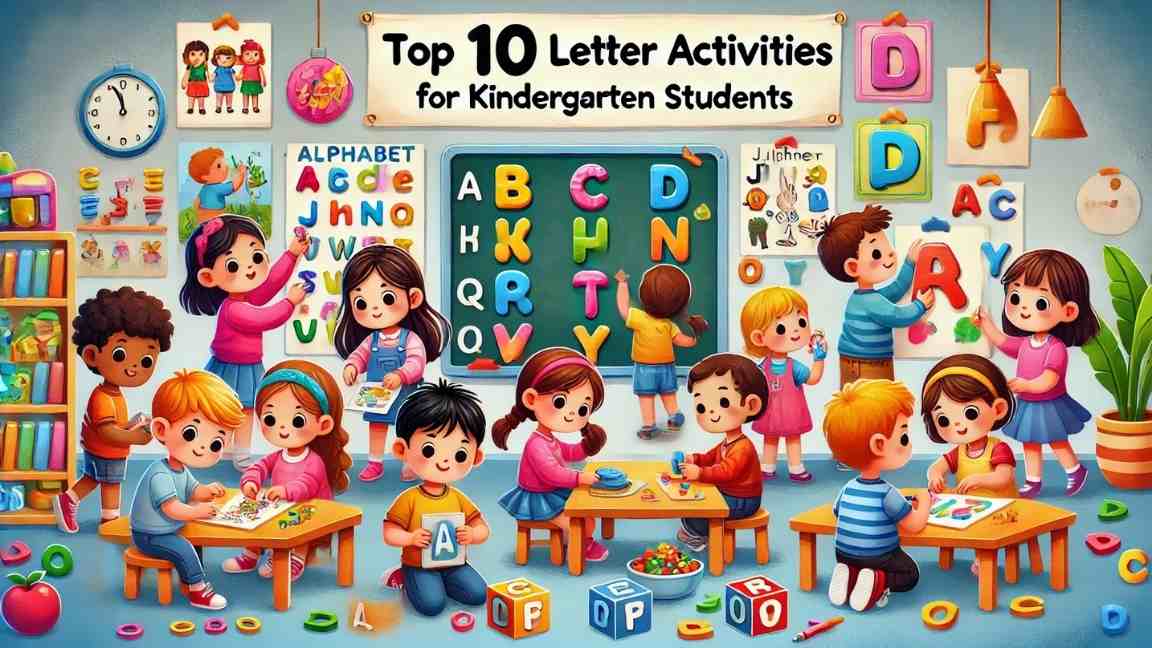
Teaching letters is a fundamental aspect of early childhood education, as it lays the foundation for reading and writing. Engaging kindergarten students with letter activities can make learning enjoyable and effective. In this article, I’ll share ten creative and fun letter activities for kindergarten that can help young learners develop their literacy skills while having a great time. Each activity includes detailed descriptions, the benefits they offer, and personal experiences that highlight the joy these activities bring.
Importance of Letter Activities for Kindergarten
Engaging in letter activities is crucial for kindergarten students because it:
- Enhances Letter Recognition: Activities help children recognize and remember letters, which is essential for reading.
- Develops Phonemic Awareness: Letter activities often incorporate sounds, aiding children in understanding the connection between letters and sounds.
- Encourages Fine Motor Skills: Many activities involve cutting, gluing, and writing, which strengthen fine motor skills.
- Promotes Social Interaction: Group activities foster collaboration and communication among peers, enhancing social skills.
Letter Activities for Kindergarten Students
1. Nature Scavenger Hunt
Description: A nature scavenger hunt involves children searching for specific items in nature, whether it’s in a backyard, park, or garden.
- How to Prepare: Create a list of items for children to find, such as leaves, flowers, rocks, or insects. Include letters that correspond to each item. For example, for the letter “B,” they might look for a “bark” or “butterfly.”
- How to Play: Take the children outside and encourage them to search for the items on the list. Once they’ve found everything, gather together to share what they discovered. Encourage them to talk about their favorite finds and why they chose them.
Benefits: This activity promotes letter recognition and vocabulary building while encouraging movement and exploration. It helps children connect letters to real-world items.
Personal Experience: I conducted a nature scavenger hunt during our letter of the week theme, and it was incredibly engaging! The children were thrilled to search for items, and their excitement grew as they found objects corresponding to the letters. One child found a “bark” for the letter “B” and exclaimed, “Look, this is a tree’s bark!” It reinforced the connection between letters and everyday items, making learning fun.
Also Check: Preschools in Delhi
2. Letter Collage
Description: Create a collage using pictures and items that correspond to a specific letter.
- How to Prepare: Provide magazines, scissors, glue, and large sheets of paper. Choose a letter for each child or group to focus on. Prepare a list of items that start with the letter for inspiration.
- How to Play: Have the children cut out pictures of objects that start with their assigned letter and glue them onto the paper, forming a collage. Encourage them to share their collages with the class.
Benefits: This activity enhances fine motor skills, promotes creativity, and reinforces letter-sound associations. It also allows children to practice their cutting and gluing skills.
Personal Experience: I had my students create letter collages, and they had a blast flipping through magazines to find pictures. One child created a collage for the letter “D” and included a dog, a drum, and a donut. They were so proud of their work, and it sparked a discussion about all the words that start with “D.” It was a wonderful opportunity for them to share their thoughts and learn from each other.
3. Letter Relay Race
Description: Combine physical activity with letter recognition through a relay race.
- How to Prepare: Set up stations with letters placed at various points in the play area. Provide each child with a card displaying a letter.
- How to Play: Divide the children into teams. One child from each team races to a station, finds the letter on their card, and returns to their team. The next child then goes. To reinforce learning, they can say the letter and a word that starts with it upon their return.
Benefits: This activity promotes letter recognition and teamwork while keeping children physically active.
Personal Experience: The letter relay race was a highlight of our week! The children were excited to run and search for their letters. The competitiveness brought out their enthusiasm, and it was delightful to see them cheer for each other. It reinforced their knowledge of letters while allowing them to expend energy in a fun way. Watching them high-five each other after finding the correct letters was priceless!
4. Alphabet Sensory Bins
Description: Create sensory bins that focus on the alphabet, providing tactile experiences that engage children’s senses.
- How to Prepare: Fill bins with materials like rice, sand, or beans and hide plastic letters or letter cards within them. For added engagement, you could use themed items that relate to the letters.
- How to Play: Encourage children to dig through the bins to find letters. When they find one, they can say the letter and a word that starts with it. Incorporate tools like scoops, cups, and tweezers to enhance the sensory experience.
Benefits: Sensory play enhances fine motor skills and provides opportunities for imaginative play and sensory exploration.
Personal Experience: I set up a sensory bin with colored rice and small plastic letters, and it was a hit! The children loved digging through the rice to find the letters, and they were fully engaged for an extended period. Their laughter and excitement during this activity made it clear that sensory play is essential for their development, as they eagerly discussed what they found and the letters they uncovered.
Also Check: Preschools in Ghaziabad
5. Letter Bingo
Description: A fun twist on bingo that reinforces letter recognition and sound identification.
- How to Prepare: Create bingo cards featuring letters instead of numbers. Prepare calling cards with the corresponding letters. You can add pictures for visual reinforcement.
- How to Play: Call out a letter, and children cover that letter on their bingo card with a marker or chip. The first to get a line wins! To reinforce learning, they can say a word that starts with each letter called.
Benefits: This activity promotes letter recognition and listening skills while providing a fun, competitive element.
Personal Experience: Letter Bingo became a favorite game in my classroom! The children were excited to play, and the competitive spirit kept them engaged. I saw a noticeable improvement in their letter recognition, and it created a fun learning atmosphere that everyone enjoyed. The joy on their faces when they shouted “Bingo!” was priceless!
6. Letter Writing Practice
Description: Provide opportunities for children to practice writing letters in creative ways.
- How to Prepare: Set up a writing station with different writing tools such as crayons, markers, chalk, and paper. You could also provide different surfaces like chalkboards or sand trays.
- How to Play: Encourage children to write letters on the paper or in the sand while saying the letter’s name and sound aloud. You can introduce worksheets for guided practice or let them explore freely.
Benefits: This activity enhances fine motor skills, letter recognition, and phonemic awareness.
Personal Experience: I love incorporating letter writing practice into our routine. One day, we used sand trays, and the children enjoyed writing letters with their fingers. They were engaged and excited about the tactile experience, which made practicing letters feel like a fun game rather than a chore. The proud smiles on their faces when they wrote their names or letters correctly were heartwarming.
7. Letter Sound Match
Description: This activity reinforces letter recognition and phonemic awareness through a matching game.
- How to Prepare: Create cards with letters on one set and pictures of items that start with those letters on another set. Use images that are familiar to the children.
- How to Play: Spread the cards out and have children match the letter cards with the corresponding picture cards. Encourage them to say the letter and the sound it makes as they match.
Benefits: This activity promotes phonemic awareness and reinforces the connection between letters and sounds.
Personal Experience: I organized a letter sound match game, and the children loved it! They were excited to find matches and enjoyed saying the sounds aloud. It sparked conversations about other words that start with the same letters, reinforcing their learning in a fun and interactive way. Their enthusiasm was infectious, and it created a lively learning environment.
8. Alphabet Hopscotch
Description: Create a hopscotch game that reinforces letter recognition and physical activity.
- How to Prepare: Use sidewalk chalk to draw a hopscotch grid on the ground, filling each square with a different letter. You can even incorporate letter sounds or corresponding words into the squares.
- How to Play: Children take turns hopping to different letters as you call them out. They can say the letter and a word that starts with it each time they land on one.
Benefits: This activity promotes physical fitness, letter recognition, and coordination.
Personal Experience: The letter hopscotch game was a fantastic way to combine movement with learning. The children enjoyed hopping from letter to letter, and their laughter filled the air. It helped them associate letters with movement, reinforcing their recognition through active play. I loved watching their faces light up with joy as they successfully hopped to the right letter.
Also Check: School Parent app
9. Crafting with Letters
Description: Create crafts that incorporate letters, allowing children to engage in hands-on learning.
- How to Prepare: Gather craft materials like construction paper, glue, scissors, and decorative items. Choose a letter to focus on for each craft.
- How to Play: Have children create items that begin with a specific letter, such as a “B” for boat or a “C” for cat. They can decorate their crafts and present them to the class.
Benefits: This activity reinforces letter recognition while enhancing creativity and fine motor skills.
Personal Experience: I love integrating crafting with letter learning. One memorable day, we focused on the letter “F,” and the children made fun fish using paper plates and markers. They were so proud of their creations, and sharing them with the class reinforced their understanding of the letter and its sound. It turned into a beautiful showcase of creativity and learning.
10. Letter Yoga
Description: Combine movement and letter learning through a fun yoga session where each pose represents a letter.
- How to Prepare: Create a list of simple yoga poses that resemble letters (e.g., “T” for tree pose, “C” for cat pose). Prepare a mat or a safe space for the children to practice.
- How to Play: Call out a letter, and show the corresponding pose. As they hold each pose, encourage children to say the letter and a word that starts with it.
Benefits: This activity promotes physical fitness, letter recognition, and mindfulness. It allows children to connect their bodies with their learning.
Personal Experience: I introduced letter yoga one day, and it was an absolute hit! The children loved moving their bodies and linking it to the letters. Their giggles while transitioning between poses created a joyful atmosphere. It reinforced their letter knowledge while promoting relaxation and focus. Watching them connect physical activity with learning was truly rewarding.
Conclusion
Engaging kindergarten students in diverse letter activities is essential for their physical, social, and cognitive development. The activities outlined in this article not only keep children entertained but also provide valuable learning experiences that foster creativity, cooperation, and a love for exploration.
My experiences implementing these activities have shown that when children are engaged and excited, they thrive in their learning environments. Each activity has the potential to create lasting memories and strengthen the bonds between children and their peers, teachers, and families.
As you plan your activities for your preschoolers, consider incorporating these ideas to make learning fun, memorable, and meaningful. Embrace the joy of play and watch as your little ones flourish through these enriching experiences!
Also Read: Number Activities for Kindergarten