
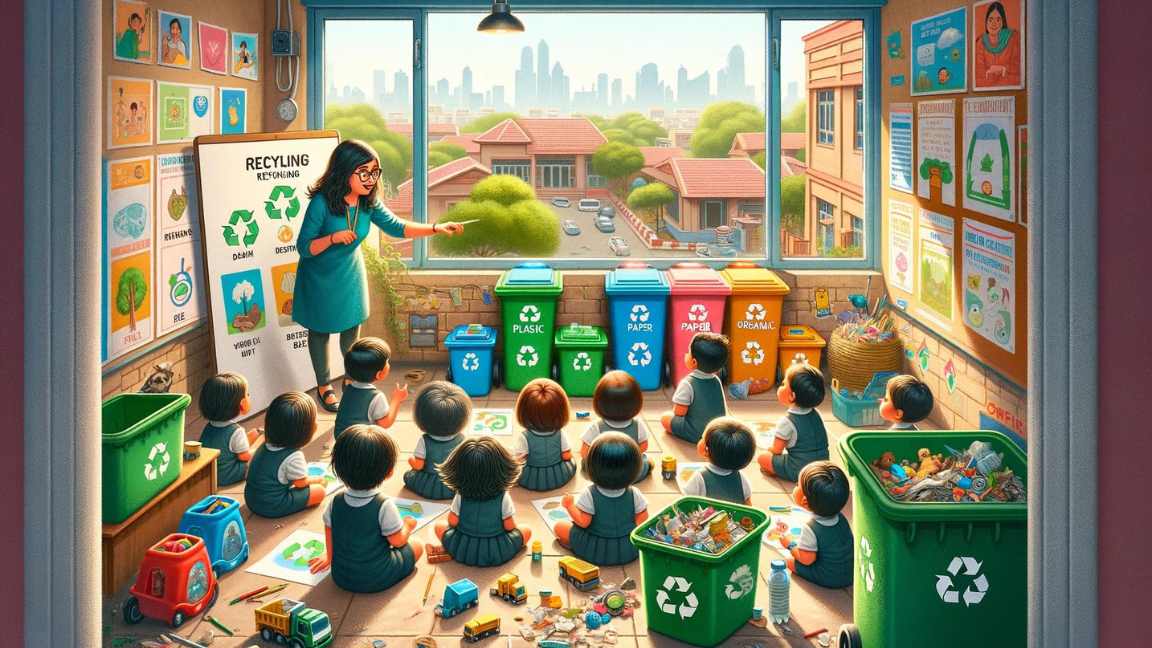
Teaching toddlers about recycling is crucial in nurturing environmentally conscious individuals from a young age. In a bustling metropolis like Delhi, where waste management and pollution are significant concerns, early education on recycling can play a pivotal role in fostering sustainable habits. This article explores effective strategies for Delhi toddler recycling education, emphasizing engaging activities, practical tips, and the role of preschools in India and parents in this important task.
Why Recycling Education Matters for Toddlers
Introducing recycling concepts to toddlers helps them understand the importance of preserving natural resources and protecting the environment. Early exposure to these ideas can:
- Instill Lifelong Habits: Learning about recycling at a young age encourages children to adopt environmentally friendly practices throughout their lives.
- Promote Responsibility: Teaching toddlers about waste segregation and recycling fosters a sense of responsibility toward their community and the planet.
- Enhance Cognitive Development: Recycling activities can improve toddlers’ sorting, categorizing, and problem-solving skills.
Engaging Activities for Teaching Recycling
1. Recycling Sorting Game
Create a fun sorting game where toddlers can practice identifying and categorizing different types of recyclable materials. Provide bins labeled with images of paper, plastic, glass, and metal, and give children various items to sort. This hands-on activity reinforces the concept of recycling while improving their cognitive abilities.
2. Crafting with Recyclables
Encourage creativity by using recyclable materials for art projects. Activities such as making collages with old magazines, building structures with cardboard boxes, and creating sculptures from plastic bottles can be both educational and enjoyable for toddlers. This approach teaches them the value of reusing materials and reduces waste.
3. Storytime with Recycling Books
Reading books about recycling and environmental conservation can help toddlers grasp these concepts more easily. Select age-appropriate books with engaging illustrations and simple narratives that highlight the importance of recycling.
4. Nature Walk and Clean-Up
Organize a nature walk where toddlers can observe their surroundings and participate in a clean-up activity. Provide them with gloves and small bags to collect litter, teaching them about the impact of waste on the environment. This outdoor activity combines physical exercise with environmental education.
Role of Preschools in Recycling Education
Preschools in Delhi play a vital role in promoting recycling education. By incorporating recycling activities into their curriculum, preschools can help shape environmentally responsible behaviors in young children. Some strategies include:
- Creating Recycling Stations: Set up designated recycling stations in classrooms where children can practice sorting recyclables daily.
- Interactive Workshops: Host workshops and interactive sessions that teach toddlers about recycling through games, stories, and hands-on activities.
- Collaborative Projects: Encourage group projects where children work together to create something from recyclable materials, fostering teamwork and creativity.
Involvement of Parents
Parents play an essential role in reinforcing recycling education at home. Utilizing tools like a school parent app can facilitate communication between teachers and parents, ensuring consistency in teaching recycling concepts. Here are some ways parents can contribute:
1. Lead by Example
Children learn by observing their parents’ actions. By actively participating in recycling and waste reduction practices, parents can set a positive example for their toddlers.
2. Create a Recycling Routine
Establish a recycling routine at home where toddlers can participate. Involve them in sorting recyclables, taking them to recycling centers, or using a school parent app to track their progress and share achievements with their teachers.
3. Educational Outings
Take toddlers on educational outings to recycling centers, waste management facilities, or environmental conservation sites. These visits can provide practical insights into how recycling works and its benefits.
Practical Tips for Effective Recycling Education
1. Simplify the Concepts
Keep explanations simple and age-appropriate. Use visual aids, such as pictures and videos, to help toddlers understand the recycling process.
2. Make It Fun
Incorporate games, songs, and stories into recycling education to keep toddlers engaged and interested. Fun activities make learning about recycling enjoyable and memorable.
3. Reward Positive Behavior
Acknowledge and reward toddlers for their efforts in recycling. Praise, stickers, or small treats can motivate them to continue participating in recycling activities.
4. Consistency is Key
Ensure that recycling practices are consistent both at home and in preschool. Regular reinforcement helps toddlers develop a routine and reinforces the importance of recycling.
Conclusion
Delhi toddler recycling education is a vital step towards building a sustainable future. By engaging toddlers through fun activities, involving parents, and incorporating recycling education into preschool curricula, we can instill eco-friendly habits in young children. Preschools in Delhi, alongside parents, play a crucial role in this educational journey. With consistent effort and creative approaches, we can nurture a generation of environmentally conscious individuals who are committed to preserving the planet for future generations.
Also Check: Summer Activities for Kids