
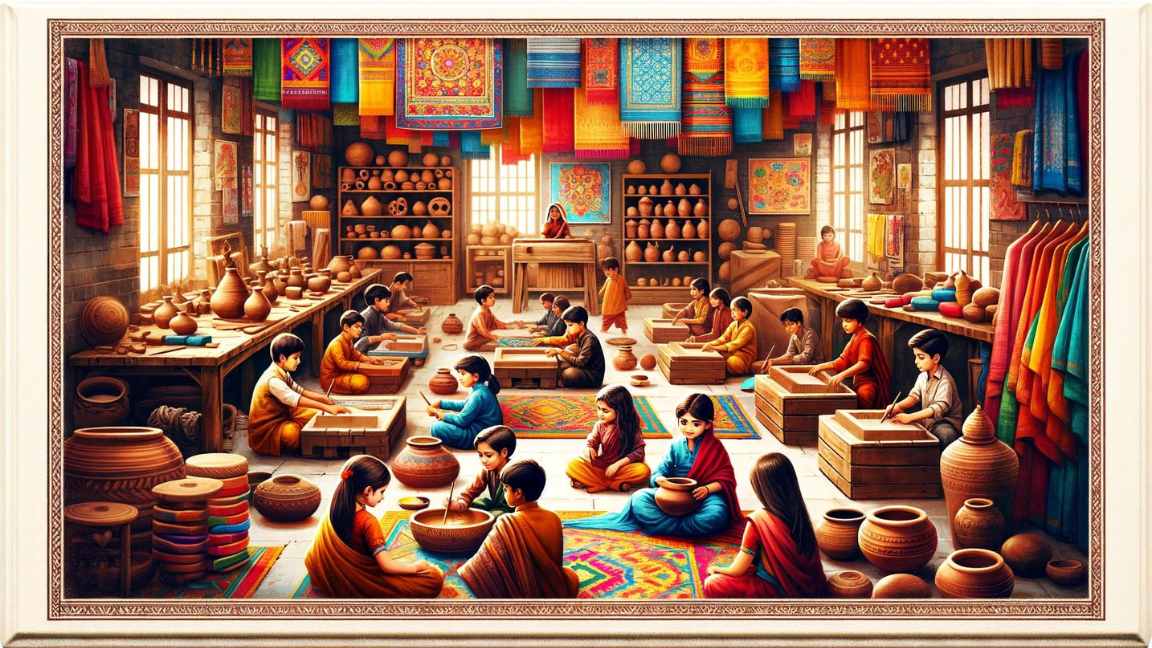
Hyderabad, a city rich in history and culture, places a strong emphasis on integrating traditional crafts into the educational curriculum of its schools. This approach not only preserves and celebrates local heritage but also provides students with a unique and enriching learning experience. In this article, we explore how traditional crafts are taught in Hyderabad’s schools, the impact on students, and the role of various educational institutions including preschools in Hyderabad.
Integration of Traditional Crafts in Curriculum
1. Craft-Centered Syllabus
Many schools in Hyderabad have developed a curriculum that includes a wide range of traditional crafts such as handloom weaving, pottery, and traditional painting techniques like Cheriyal scroll painting and Kalamkari. These crafts are taught through both theoretical and practical sessions, allowing students to understand the cultural, historical, and artistic significance of each craft.
2. Collaboration with Local Artisans
Schools often collaborate with local artisans who are masters in traditional crafts. These artisans visit schools as guest instructors to provide hands-on training to students. This direct learning from seasoned craftsmen not only boosts the authenticity of the teaching process but also helps in sustaining the livelihood of the local artisan community.
3. Workshops and Exhibitions
To further enrich students’ learning, schools organize workshops and exhibitions where students can display their craftwork. These events encourage students to take pride in their work and foster a sense of accomplishment. Moreover, exhibitions open to the public help in raising awareness about traditional crafts among the broader community.
Benefits of Learning Traditional Crafts
1. Enhancing Creativity and Skills
Learning crafts helps in developing fine motor skills, hand-eye coordination, and spatial awareness among students. It also boosts their creativity, as crafting requires thinking out of the box and applying artistic skills in tangible forms.
2. Cultural Awareness
By engaging in traditional crafts, students gain a deep appreciation of their cultural heritage. This education helps cultivate a sense of identity and pride in their cultural background, which is essential in a globalized world.
3. Emotional and Mental Well-being
Crafting has therapeutic benefits; it can significantly reduce stress and anxiety in students. The focus required in crafting can serve as a form of meditation, helping students find a sense of calm and accomplishment in their creations.
Role of Technology and Community
1. Digital Platforms and Apps
In addition to traditional classroom teaching, digital platforms and apps, such as the school parent app, are used to document and share students’ craft projects. These platforms can offer tutorials, additional resources, and a digital portfolio of students’ work, making it easier for parents to engage with their children’s learning.
2. Community Involvement
Schools encourage community involvement by inviting parents and local residents to craft exhibitions and school events. This practice strengthens the community bonds and provides a support system for nurturing the talents of young crafters.
Conclusion
The way traditional crafts are taught in Hyderabad’s schools is a testament to the city’s commitment to preserving its cultural heritage through education. Schools in Hyderabad, including preschools in Hyderabad and beyond, play a crucial role in this endeavor. They not only provide students with the skills necessary to carry forward traditional arts but also imbue them with a deep respect for their cultural legacy. As this practice continues, it ensures that the rich tapestry of Hyderabad’s traditions is not lost but flourished in the hands of its young learners.
Also Read: Preschools in India