
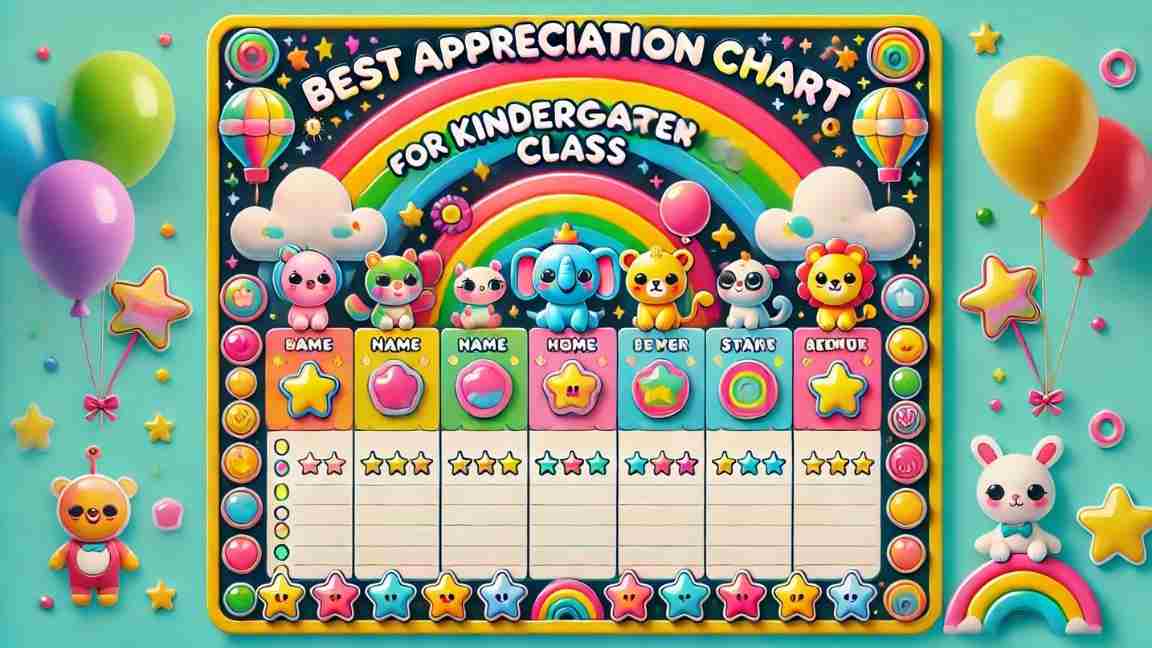
Encouragement and recognition are essential tools for building confidence, motivation, and positive behavior in young children. An appreciation chart for kindergarten serves as a simple yet effective way to acknowledge children’s efforts and inspire them to keep improving. Over the years, I’ve used various types of appreciation charts in my classroom, and they have always worked wonders. Here are 10 detailed appreciation chart ideas, complete with descriptions, steps to create them, and my personal experiences.
Appreciation Charts for Kindergarten
1. Star Sticker Chart
Description: A star sticker chart is one of the most straightforward and visually appealing ways to reward children. The chart is divided into rows for each child, and they earn a star for completing tasks, showing good behavior, or achieving goals. This method works well for individual achievements while also fostering a sense of friendly competition.
How to Create:
- Use a large poster board or whiteboard.
- Draw a grid with rows for each child’s name and columns for stars.
- Keep a supply of colorful star stickers or draw stars with markers.
- Reward stars for specific behaviors, such as completing homework, sharing, or tidying up.
My Experience: I used this chart to reward kindness. For example, when Mia shared her crayons with Ethan, she earned a shiny gold star. The kids took great pride in their stars, and some even asked to help with classroom chores just to earn one. Parents shared that their kids started being more helpful at home, showing the impact of this simple chart.
2. Smiley Face Chart
Description: A smiley face chart uses cheerful stickers to acknowledge positive actions. It’s perfect for younger children who respond well to bright visuals and immediate rewards. Each smiley face becomes a little celebration of their achievements.
How to Create:
- Create a chart with each child’s name listed.
- Design columns for smiley face stickers.
- Choose specific behaviors to reward, such as completing morning routines or following directions.
- Place a smiley sticker next to a child’s name whenever they meet the criteria.
My Experience: I used this chart to encourage good manners during snack time. When Ethan said “please” and “thank you,” he earned a smiley face sticker. Clara was so motivated by this that she began reminding her classmates to use polite words. Parents noticed their kids practicing better manners at home, which they appreciated greatly.
3. Kindness Tree Chart
Description: The kindness tree chart is a creative way to promote acts of kindness in the classroom. The chart features a large tree illustration, and children add leaves, flowers, or fruits to the tree whenever they display kindness.
How to Create:
- Draw or print a large tree on a poster board.
- Cut out leaf, flower, or fruit shapes from colored paper.
- Write the child’s name and their kind act on the shape.
- Attach it to the tree, creating a visual representation of kindness growing in the classroom.
My Experience: One day, Liam helped Mia pick up her spilled crayons, and the class added a bright yellow flower to the kindness tree in his honor. Watching the tree “bloom” with good deeds inspired other students to look for ways to be helpful. Parents told me their children started using phrases like, “I want to add a leaf to our tree!” at home.
Also Check: Preschools in Delhi
4. Helper of the Day Chart
Description: This chart celebrates daily classroom helpers, giving every child the chance to feel important. Roles can include line leader, snack helper, or cleanup supervisor.
How to Create:
- Create a grid listing helper roles and the days of the week.
- Assign a child to each role for each day.
- Mark their contributions with stickers, stars, or their names on the chart.
- Rotate roles weekly or daily to ensure everyone gets a turn.
My Experience: Ethan was thrilled to be the “line leader” for the day, proudly moving his name to the chart. He became so excited about helping that he volunteered to clean up the play area without being asked. Parents later shared how these roles encouraged their kids to take on small responsibilities at home.
5. Reading Achievement Chart
Description: A reading achievement chart tracks the number of books or stories each child reads. This chart fosters a love for reading and gives children a sense of accomplishment.
How to Create:
- Use a poster board to create a bookshelf design with slots for each book.
- Write the child’s name on book-shaped cutouts.
- Add a “book” to their slot every time they read a new story.
- Offer small rewards for reaching milestones, like completing five books.
My Experience: During our weekly storytime, Liam became excited about adding a new “book” to his row after he read aloud The Very Hungry Caterpillar. Over time, the class started encouraging each other to read more. Parents noticed their children asking for more bedtime stories, showing how this chart nurtured a love for reading.
6. Behavior Rainbow Chart
Description: A behavior rainbow chart uses colors to track and reward good behavior. Each child’s name starts on a neutral color and moves toward the rainbow’s end as they demonstrate positive actions.
How to Create:
- Draw a rainbow on a large poster or board.
- Attach name cards for each child at the starting point.
- Move their cards along the rainbow as they earn points for good behavior.
- Celebrate milestones when a child reaches the end of the rainbow.
My Experience: I used this chart to improve listening during circle time. Ethan, who often got distracted, became one of the best listeners because he wanted his name to reach the rainbow’s end. Parents noticed improvements in their children’s focus at home as well.
Also Check: Preschools in Mumbai
7. Team Points Chart
Description: This chart encourages teamwork by awarding points to groups of children for collective achievements, such as completing a project or working together on an activity.
How to Create:
- Divide the class into teams and assign each a unique color or symbol.
- Track points on the chart for collaborative tasks.
- Set a goal, such as 50 points, and reward the winning team with a small prize.
My Experience: During a team puzzle activity, Mia’s group worked together seamlessly and earned five points on the chart. The excitement of seeing their score climb motivated the other teams to collaborate better. Parents loved how this chart reduced competitiveness and encouraged teamwork.
8. Attendance Appreciation Chart
Description: This chart tracks daily attendance and rewards consistent presence. It’s a great way to instill responsibility and punctuality in young children.
How to Create:
- Create a grid with children’s names and the days of the week.
- Mark attendance with colorful stickers or symbols.
- Reward consistent attendance with certificates or small prizes.
My Experience: Clara, who often missed school, became excited about earning stickers for daily attendance. Over a month, her attendance improved significantly, and her parents were thrilled with the progress.
Also Check: School app for Parents
9. “I Did It!” Chart
Description: This chart celebrates small but meaningful achievements, such as learning to tie shoes or completing a craft project.
How to Create:
- Create a colorful chart with rows for each child’s name.
- Add spaces for achievements, such as tying shoes, spelling a new word, or finishing a puzzle.
- Reward achievements with badges or stickers.
My Experience: When Mia finally tied her shoes independently, she added an “I Did It!” badge to the chart. Her classmates clapped for her, boosting her confidence. Parents appreciated the recognition of these small yet significant milestones.
10. Creative Contribution Chart
Description: This chart acknowledges creativity, such as artwork, storytelling, or unique ideas, making every child feel like a valuable contributor to the class.
How to Create:
- Use a large chart with spaces for each child’s contributions.
- Add sections for drawings, stories, or other creative projects.
- Highlight their contributions with special stickers or stars.
My Experience: During art week, Ethan painted a beautiful rainbow and added it to the creative contribution chart. His classmates admired his work, and parents said their children became more excited about bringing home their projects.
These appreciation charts for kindergarten have transformed my classroom by fostering a positive and motivating environment. Each chart offers a unique way to celebrate children’s efforts, helping them build confidence and a love for learning. Whether you’re a teacher or a parent, these charts can inspire and nurture young minds effectively.
Also Read: Sense Organs Charts for Kindergarten