
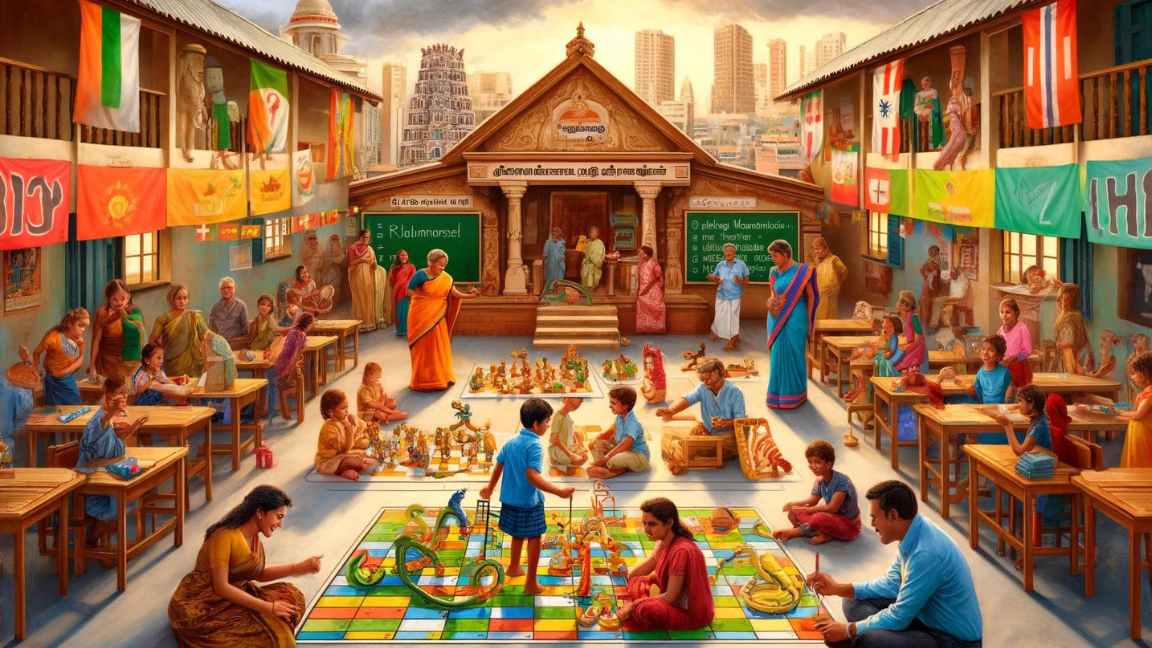
In today’s rapidly evolving educational landscape, there is a renewed interest in incorporating traditional games into the curriculum of modern preschools. Traditional games in Chennai preschools are being embraced for their cultural significance and their ability to enhance children’s physical, cognitive, and social development. This article explores the benefits of integrating traditional games into early education, how preschools in Chennai are implementing these activities, and the role of technology in supporting this initiative.
The Importance of Traditional Games
Traditional games have been passed down through generations and are a vital part of Tamil Nadu’s cultural heritage. These games, often played outdoors, are simple yet effective in teaching various skills. They promote physical activity, strategic thinking, teamwork, and cultural awareness. For young children, these games offer a break from digital screens and provide a tactile, engaging way to learn and play.
Benefits of Traditional Games for Preschoolers
Physical Development
Traditional games often involve running, jumping, and other forms of physical activity that help develop gross motor skills. Games like “Kabaddi” and “Kho-Kho” require agility, speed, and coordination, contributing to children’s overall physical fitness.
Cognitive Skills
Many traditional games involve strategy and problem-solving. For instance, “Pallanguzhi,” a traditional board game, enhances counting skills and strategic thinking. These games stimulate the brain, encouraging children to think critically and make quick decisions.
Social Skills
Traditional games are typically played in groups, promoting teamwork and social interaction. Children learn to communicate, cooperate, and resolve conflicts, which are essential social skills. Games like “Hide and Seek” and “Marbles” foster a sense of camaraderie and collective play.
Implementation in Modern Preschools
Structured Playtime
Many preschools in Chennai are incorporating structured playtime dedicated to traditional games. Teachers organize these activities in a way that ensures all children participate and benefit from the experience. This approach helps maintain a balance between modern educational methods and traditional practices.
Integration with Curriculum
Traditional games are being integrated into the broader curriculum to enhance learning. For example, counting stones in “Pallanguzhi” can be linked to math lessons, while storytelling sessions about the origins of these games can be part of language and history classes. This integration makes learning more holistic and engaging.
Outdoor Learning Environments
Preschools are utilizing outdoor spaces to conduct these activities, providing a natural and stimulating environment for children. Playgrounds and gardens are often equipped with materials needed for traditional games, ensuring that children have access to a variety of play options. This also supports the physical development of children by involving activities like running and jumping, which are essential for their growth.
Role of Technology
The school parent app is an invaluable tool for modern preschools in India. It helps in communicating with parents about the integration of traditional games into the curriculum. Through the app, parents can receive updates, photos, and videos of their children participating in these activities. It also offers resources and suggestions for parents to engage in traditional games at home.
Digital Resources
While the essence of traditional games is in their physical play, digital resources can support learning. Videos and interactive content about the rules and history of these games can be shared with children to enhance their understanding. This blend of traditional play and modern technology enriches the learning experience.
Community Involvement
Parental Engagement
Engaging parents in the reading journey is crucial. Preschools can organize reading workshops and parent-child reading sessions. These events encourage parents to read with their children at home, reinforcing the habits developed at school.
Libraries and Book Clubs
Local libraries and book clubs play a significant role in promoting reading among young children. Many libraries in Hyderabad offer story hours and reading programs specifically designed for preschoolers. Book clubs provide a social aspect to reading, allowing children to discuss books with their peers.
Challenges and Solutions
While integrating traditional games into modern preschools offers numerous benefits, it also presents challenges. These include a lack of knowledge about the games among younger teachers and limited space in urban settings. Solutions include:
- Training Programs: Providing training for teachers on the rules and benefits of traditional games ensures they are well-equipped to lead these activities.
- Adapted Spaces: Creative use of available space, such as rooftops and small playgrounds, can accommodate traditional games even in urban settings.
Conclusion
Traditional games in Chennai preschools are making a significant comeback, bridging the gap between past and present. By incorporating these games into the curriculum, preschools in Chennai are promoting physical, cognitive, and social development while preserving cultural heritage. The use of technology, such as the school parent app, enhances communication and engagement, ensuring that both parents and children benefit from this holistic approach to early education. Embracing traditional games in modern educational settings not only enriches the learning experience but also helps children develop a deep connection with their cultural roots.